Blog · Tree care advice
Tree Care Blog
Costs, permits, tree health and storm prep — written by the crew that does the work, for Clearwater homeowners deciding what to do about a tree.
Latest
Articles
No filler and no recycled listicles. These are the questions we get asked on estimates often enough that it was worth writing the answers down properly.
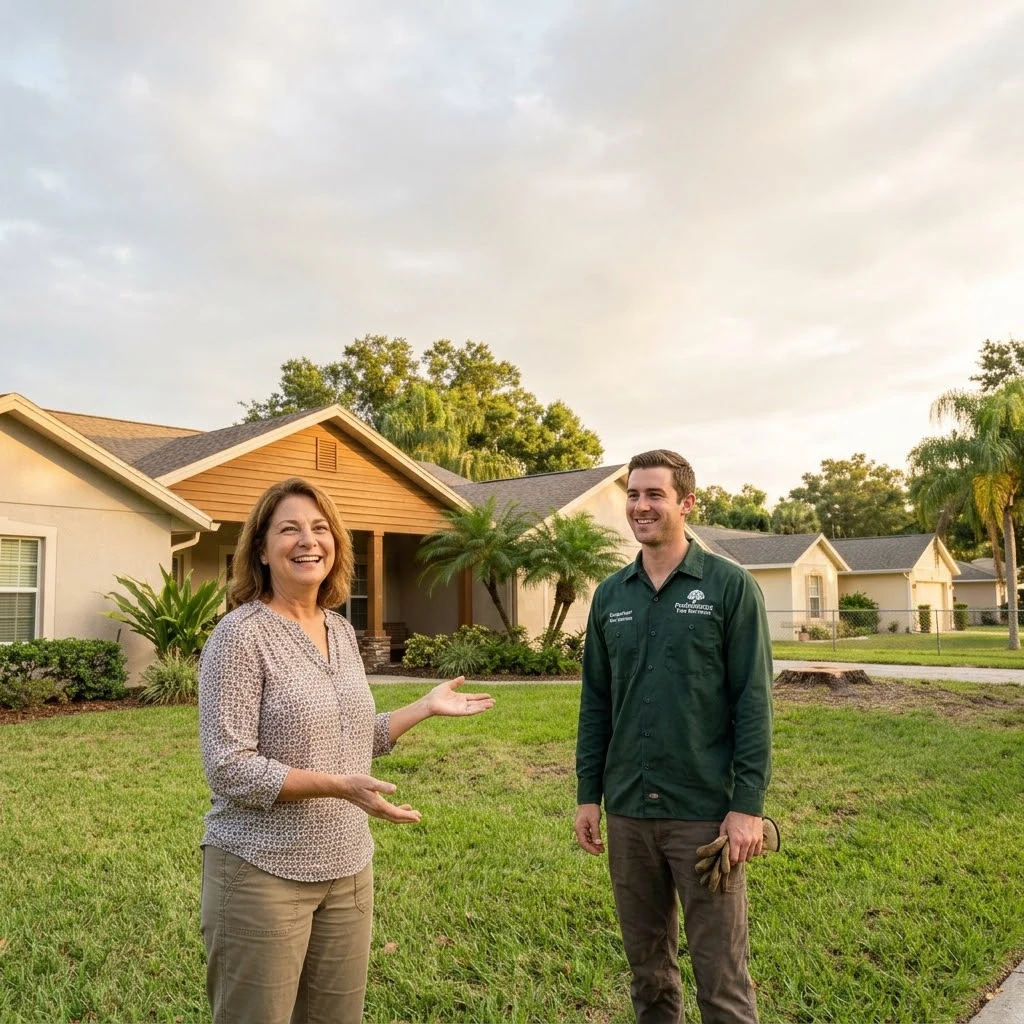
How Much Does Tree Removal Cost in Clearwater?
Real per-tree pricing for Clearwater, plus the access, size and permit factors that actually move your quote.
Read article →
Do You Need a Permit to Remove a Tree in Clearwater, FL?
What Clearwater and Pinellas County actually require before you cut down a protected tree, and the exemptions that apply.
Read article →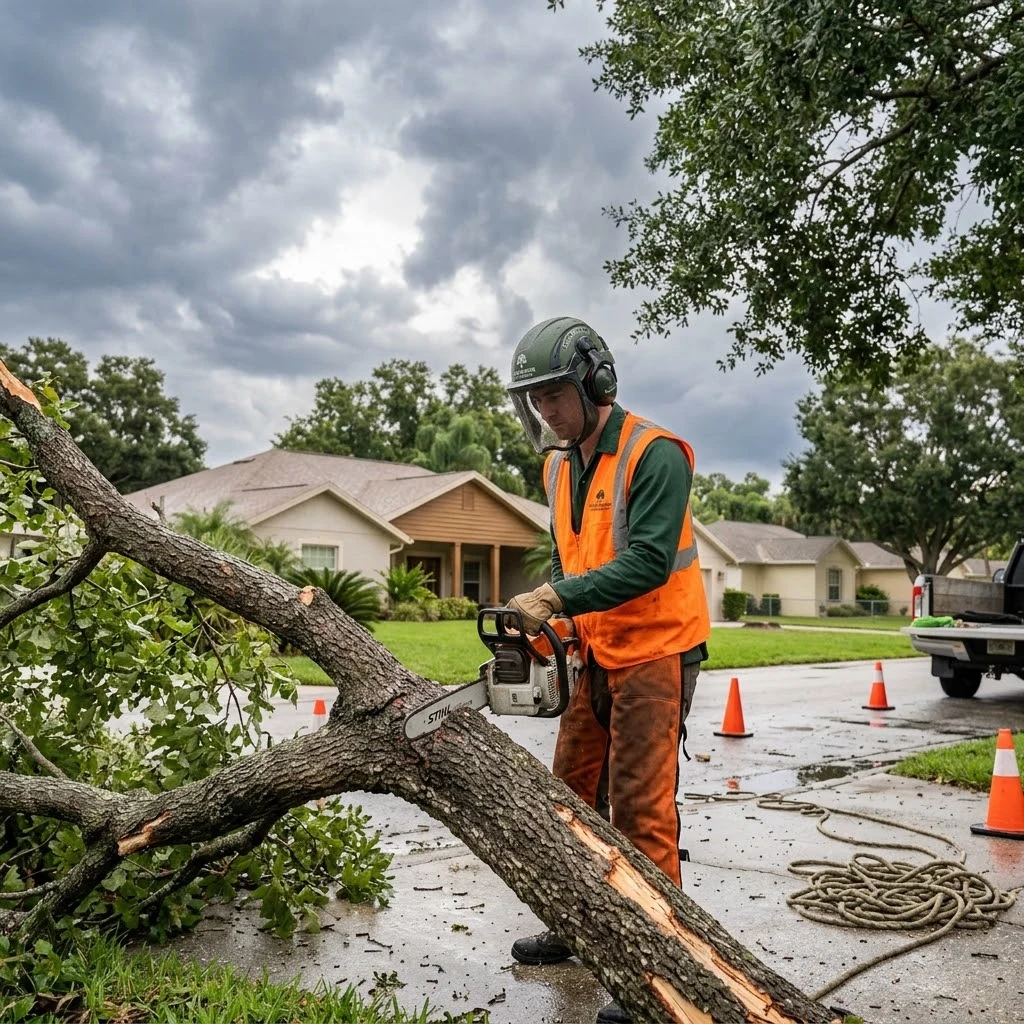
Hurricane Season Tree Prep for Clearwater Homeowners
What to prune before a named storm, what to leave alone, and how to document damage for your insurance claim.
Read article →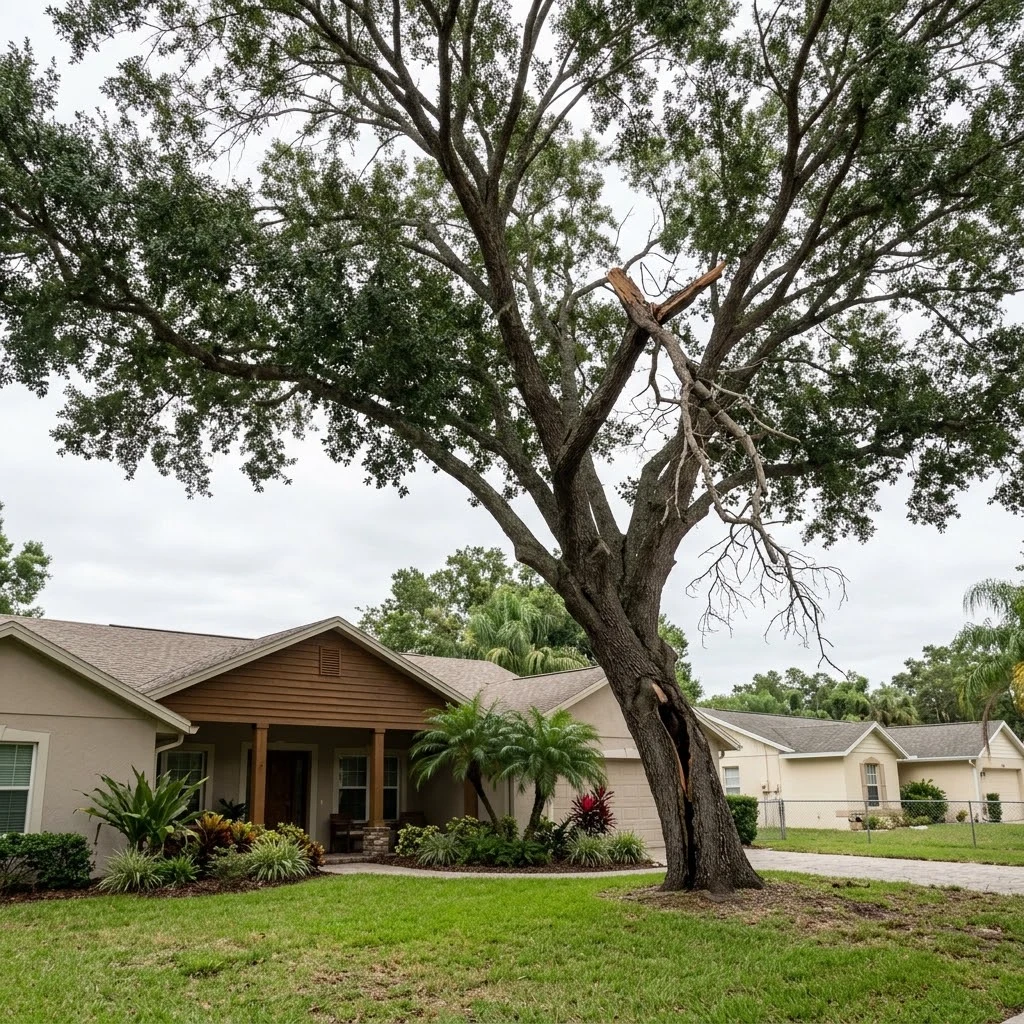
7 Signs Your Tree Is Dying or Dangerous
The fungus, cracks and canopy changes that mean a tree needs professional evaluation before it fails on its own.
Read article →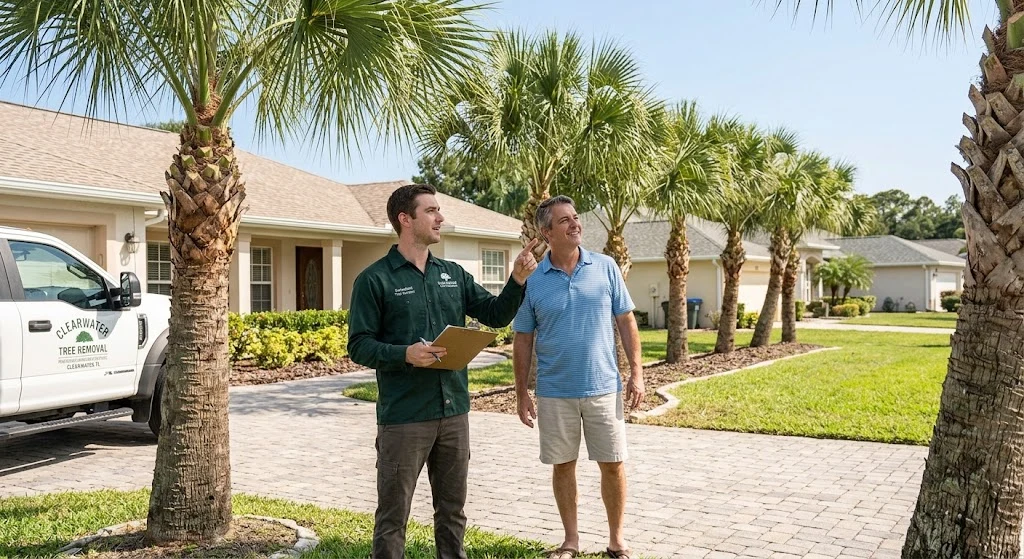
Lethal Bronzing and Sabal Palm Disease in the Clearwater Area
How to spot Florida’s fastest-spreading palm disease early, and when treatment still beats removal.
Read article →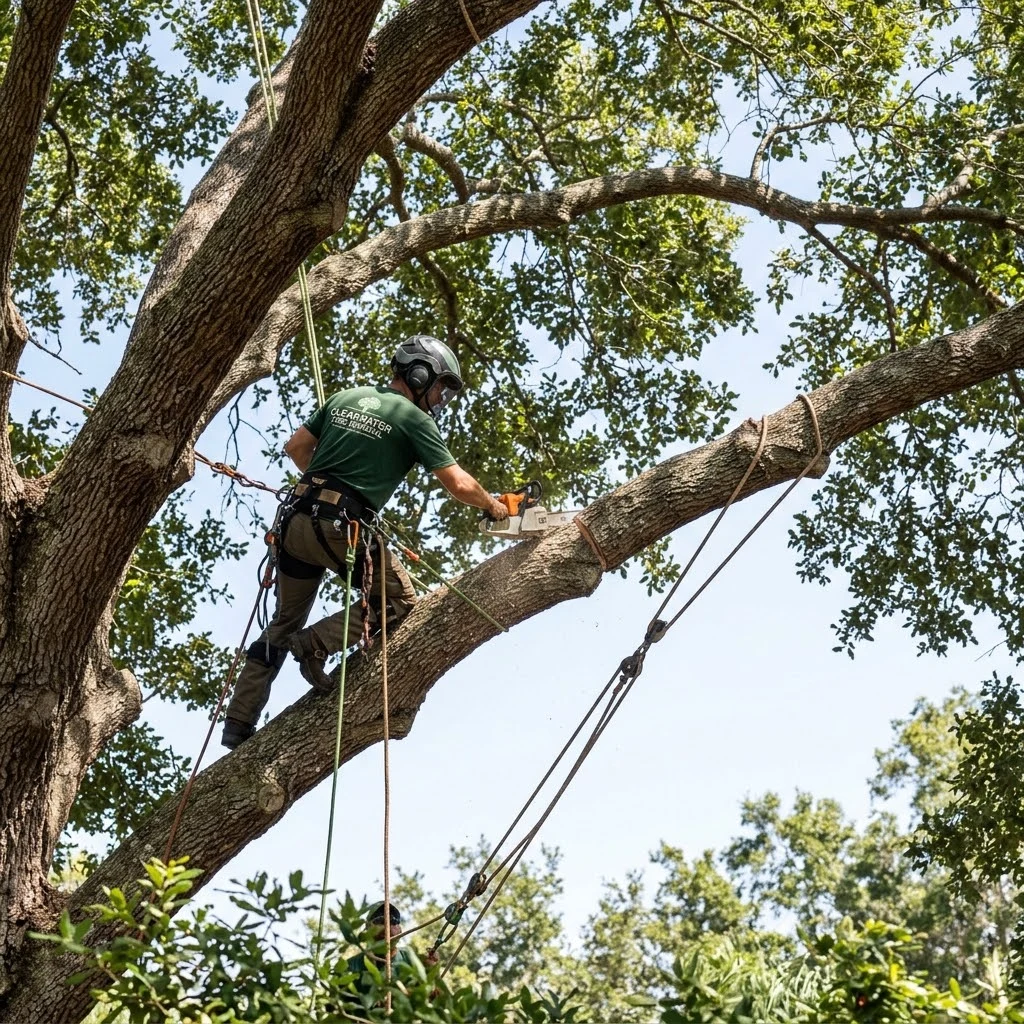
The Best Time of Year to Trim Trees in Florida
Florida’s pruning calendar runs opposite the textbooks written for northern climates — here is what actually works here.
Read article →Why we write these
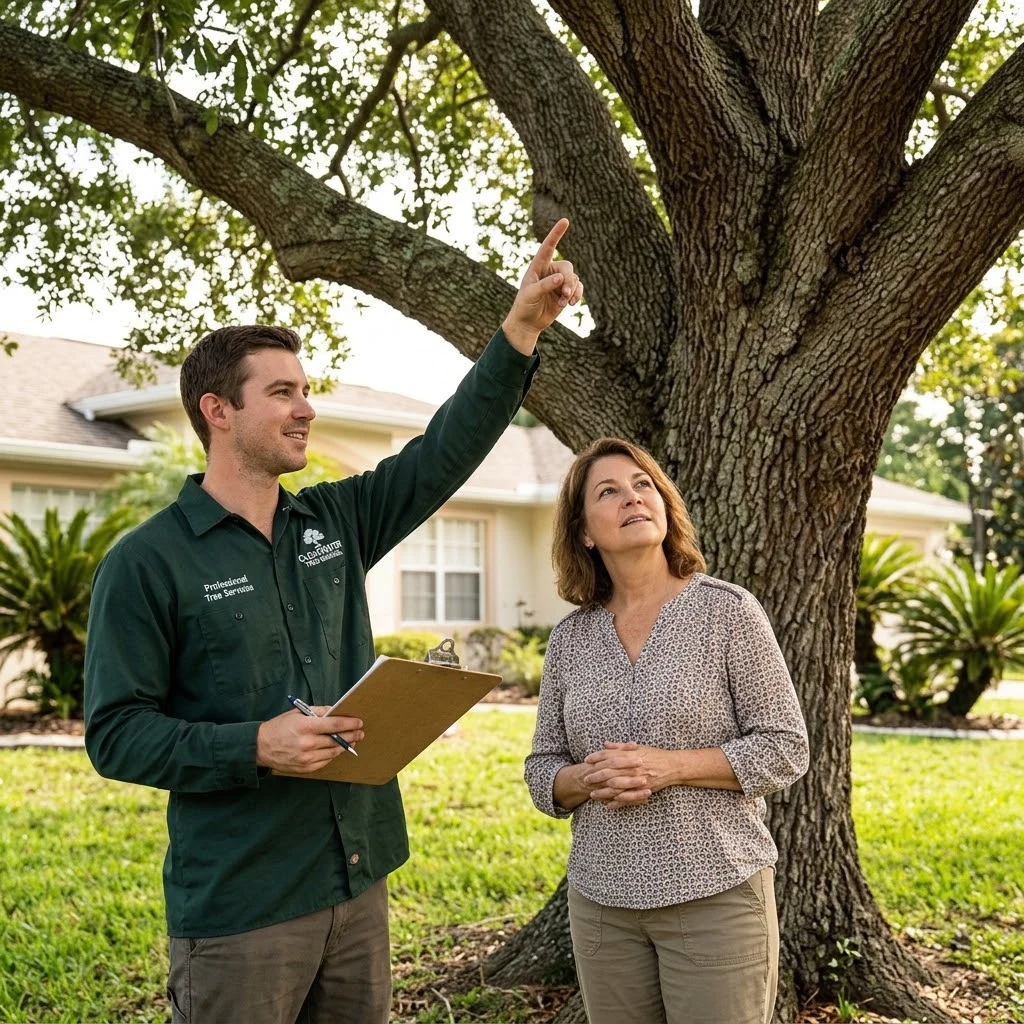
Tree removal is one of those trades where homeowners have almost no way to judge a quote. You have no idea whether $2,400 to take down an oak is fair, whether you actually need a permit, or whether the person telling you a tree is dying is being honest or upselling. That information gap is where people get taken advantage of.
So we publish the numbers. What tree removal actually costs in Clearwater, when you actually need a permit, and the real signs a tree is dying or dangerous. If reading one of these convinces you that you do not need to hire anyone yet, that is a good outcome.
What we cover, and what we deliberately do not
We write about four things: what work costs, what the local rules actually require, how to tell when a tree needs professional attention, and what to do before and after a storm. Those are the four subjects homeowners actually need help with, and they are the four where bad information is most expensive.
What we do not write is the filler that dominates this niche — the “benefits of healthy trees” posts that exist to hold keywords and say nothing. If an article here does not contain at least one number or fact you can act on, it should not be published.
Popular topics
Cost and permit questions come up most, followed by storm prep and tree health. If you have a question we have not covered, call 727-624-0396 or send it through the contact page — the good ones become articles.
Who writes them
Working arborists, not a marketing agency. That matters because most of the useful detail in this trade is the kind you only learn by assessing trees in the field. Species-specific failure patterns, why a leaning tree isn't automatically dangerous, the fact that a stump left ungrouted keeps sprouting new growth for years — none of that appears in a product brochure, and all of it changes what you should ask for.
It also means we will occasionally tell you something that costs us a job. The article on signs a tree is dying exists partly to help homeowners work out that their tree is actually fine. That is a worse outcome for our schedule this month and a better one for the referral in three years, and we would make that trade every time.
Start here
If you are trying to work out whether a quote you have been given is fair, read the cost article first — it lists the factors that make two quotes genuinely comparable. If you are dealing with a protected tree, the permit guide covers what Clearwater and Pinellas County require. And if it is storm season, the hurricane prep guide covers what to do, what to skip, and how to document damage so an insurance claim goes smoothly.
Questions
Tree care questions we get most
What it costs. Small trees run $450 to $900 in the Clearwater area, and large or mature trees run $1,800 to $4,500. The reason it comes up constantly is that almost nobody in this trade publishes prices, so homeowners have no reference point for judging a quote.
Judge it by the trunk and root structure. If those are sound and the issue is canopy shape or clearance, trimming solves it. If the trunk is split, the tree is more than half dead, or you see root heaving, a full removal avoids paying for a trim that will not hold.
Often, if the species and trunk diameter fall under local protection rules. Dead, diseased and hazardous trees are typically exempt. We verify your specific tree before quoting and can handle the permit application if one is required — see our full permit article for current guidance.
It varies enormously by species. Live oaks can stand for well over a century with good care. Sand pines and laurel oaks are naturally shorter-lived and more prone to storm failure, often needing attention within a few decades. Sabal palms can live many decades but are vulnerable to lethal bronzing disease regardless of age.
It rarely has zero warning — the signs are just often below ground or inside the trunk where they are not obvious. Root rot, internal decay and included bark at branch unions can all be invisible from the yard. That is why a professional risk assessment looks at more than what you can see standing on the lawn.
Have dead wood and overextended limbs removed while the weather is calm, since those are what typically fail first in high wind. Do not top a tree thinking it will make it safer — that actually creates weaker regrowth. Do not attempt removal or major trimming yourself once a storm watch is in effect.
If you want to replant, put in a patio, or just stop mowing around a stump, yes. A ground stump also stops new sprouts from growing out of the root collar, which an untreated stump will keep doing for years. Left alone, a stump is mostly cosmetic, so it comes down to what you want to do with the spot.
Yes, and the good questions become articles. If there is something you cannot find a straight answer to, call us or send it through the contact page. Most of what is on this blog started as a question someone asked us on an estimate.
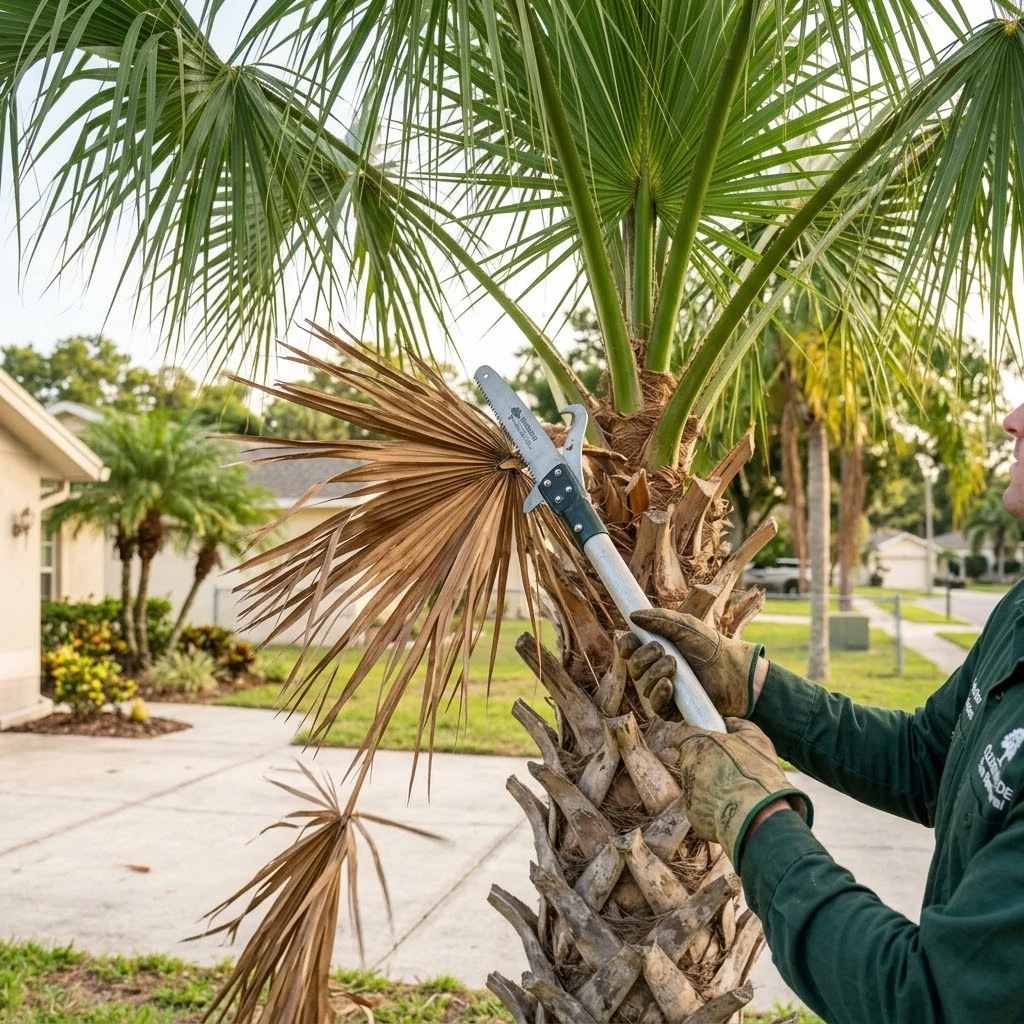
They can be. Dead fronds on a mature palm are heavy and can fall without much warning, which is a real hazard over a driveway, patio or walkway. Routine palm trimming removes them before they become a problem rather than after.
Yes, considerably. Florida gives individual counties and cities broad authority to protect specific tree species through local ordinances, which is different from a single statewide rule. That is exactly why our permit article focuses specifically on Clearwater and Pinellas County rather than general advice.
Yes. A tree can look fully leafed out and green while having significant internal decay, a weak branch union, or a compromised root plate from recent construction or grading nearby. Canopy color alone is not a reliable risk indicator, which is why we assess trunk, root flare and structure, not just leaves.
Once a year for a general health check is reasonable for most residential trees, and always before hurricane season if you are in a wind-exposed area. Older or previously damaged trees, and anything near a structure, benefit from more frequent looks.
Get your tree taken care of right
Free on-site estimate, flat written price, and a crew that does nothing but tree work. Tell us what you're looking at and we'll tell you what it costs.
Mon–Sat 7:00am–7:00pm · Licensed & insured · Serving Clearwater, Dunedin, Palm Harbor & Largo