Service · Clearwater, FL
Hazardous and Dead Tree Removal in Clearwater
Not every failing tree looks obviously sick. Our ISA-certified arborists spot the structural defects, decay, and root problems that lead to sudden failure, and remove genuinely hazardous trees before they become an emergency.
Identifying and removing trees before they fail, not after
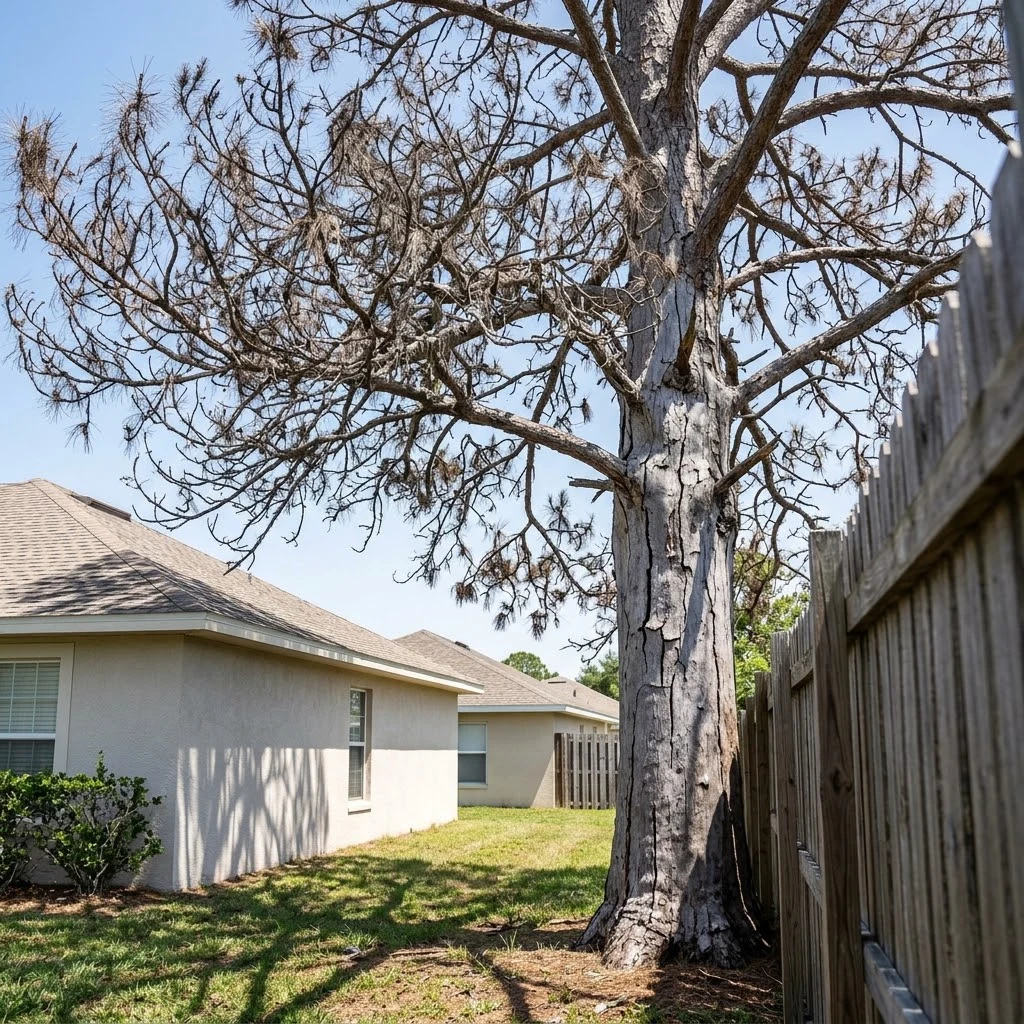
Most tree failures don't happen out of nowhere. There are usually warning signs weeks, months, or even years ahead: a widening crack in the trunk, a mushroom-like conk growing at the base signaling internal decay, a canopy that's gone thin and sparse while neighboring trees stayed full, or a lean that's become more pronounced after a wet season. The trouble is that most homeowners don't know what to look for, and by the time a tree is obviously dead or visibly cracked, it may already be close to failure. Our ISA-certified arborists assess hazard indicators that aren't obvious from the ground, and we do it as a free visit, not a paid consultation.
A hazardous tree assessment looks past the obvious. We check the root flare for girdling roots or fungal fruiting bodies, tap the trunk at multiple heights to listen for hollow sections, look for included bark at major branch unions where two limbs have grown together without a strong structural connection, and evaluate the overall lean relative to the tree's root spread and soil saturation history. A tree can look completely healthy in the canopy and still carry a serious structural defect low on the trunk or at the root flare that only shows up on close inspection.
What's included in a hazardous tree assessment
- Full visual inspection — trunk, root flare, canopy, and major limb unions checked for decay and structural defects.
- Risk rating — likelihood of failure weighed against what the tree could hit if it did fail, a fence carries different risk than a bedroom.
- Written recommendation — removal, pruning to reduce risk, cabling for structural support, or monitoring, whichever genuinely fits.
- Priority scheduling if needed — trees rated as an immediate hazard get expedited removal, not routine queue placement.
- No obligation — the assessment is free whether or not you move forward with removal.
What hazardous tree removal costs
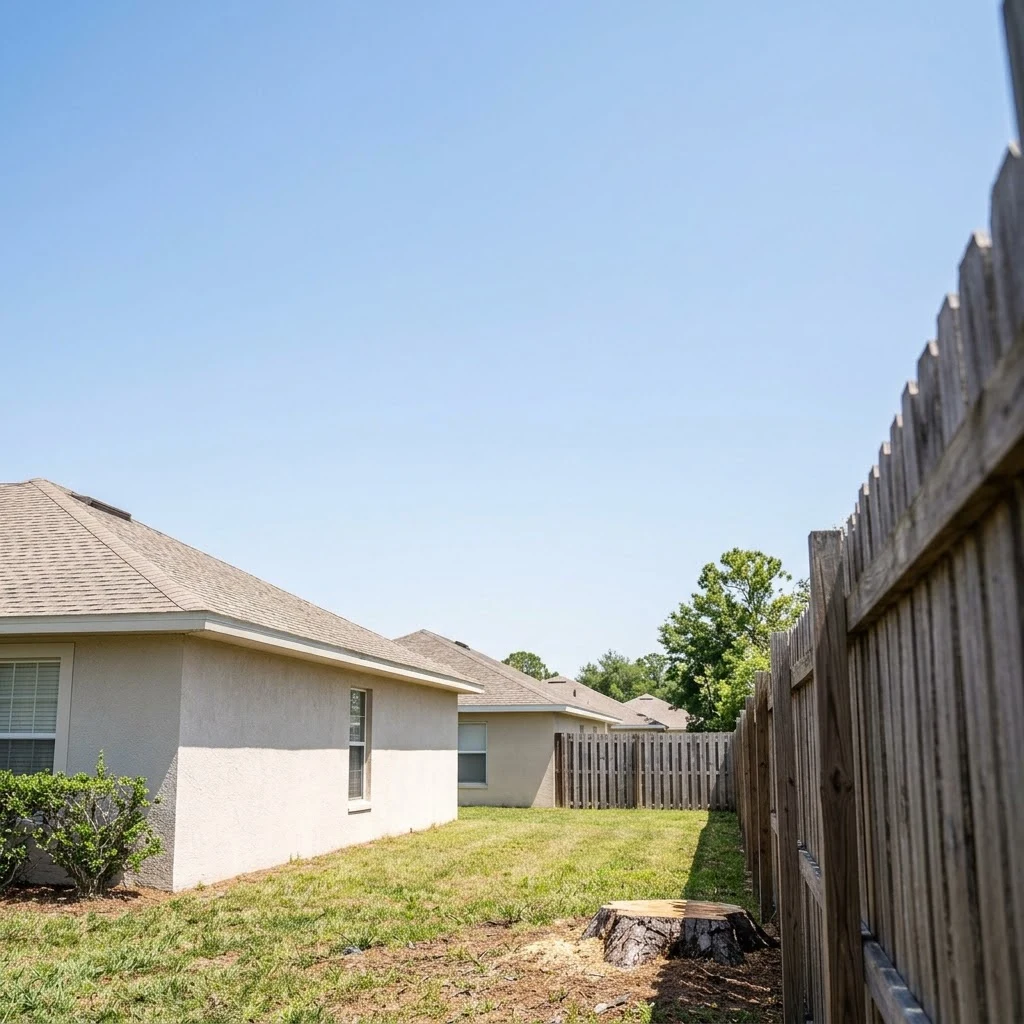
Cost depends on the same factors as any removal, size, structure, and access, but hazardous removals sometimes require more careful rigging since a decayed or hollow trunk can behave unpredictably under normal cutting techniques. A tree with significant internal decay may need to be sectioned in smaller pieces than a healthy tree of the same size, which affects both time and price.
| Job | Typical range | What moves the price |
|---|---|---|
| Dead tree, small/medium | $500 – $1,200 | Size and decay extent |
| Dead tree, large | $1,200 – $2,500 | Height and rigging complexity |
| Diseased tree with active decay | $700 – $2,800 | Decay location and structural risk |
| Leaning/root-compromised tree | $600 – $3,000 | Lean severity and target below |
| Free hazard assessment | $0 | Included with any quote request |
| Cabling (alternative to removal) | $300 – $900 | When structural support is viable instead |
Warning signs your tree may be hazardous
Look for mushroom or shelf-like fungal growth (conks) anywhere on the trunk or root flare, which almost always indicates internal decay at that location. Watch for a canopy that's thinned or died back on one side while the rest stays full, cracks or seams running vertically along the trunk, especially ones that weep sap or show insect activity, and any sudden change in lean, particularly after heavy rain when saturated soil reduces root anchorage. Cavities you can see or reach into at the trunk base, and large dead limbs still attached in the upper canopy, are also red flags worth a professional look.
Why hazard trees are more common after Florida storm seasons
Wind stress and root saturation from tropical systems don't always kill a tree outright, but they frequently cause damage that shows up as a hazard months later: hairline root breakage that weakens anchorage without an obvious lean yet, internal trunk cracking from wind torque that isn't visible from outside, and fungal infection taking hold in wounds created during the storm. This is why we recommend a hazard assessment for mature trees in the months following an active hurricane season, even if nothing looks obviously wrong yet. A tree that survived one storm season without visible damage is not automatically in the clear for the next one, cumulative stress across multiple seasons is a real factor in eventual failure.
Where we do this work
We assess and remove hazardous trees throughout Pinellas County, including mature canopy in Clearwater, coastal lots in Dunedin, and properties across Largo and Palm Harbor. See our full service area for every city we cover.
Questions
Hazardous and Dead Tree Removal FAQs
Key warning signs include fungal conks on the trunk or root flare, a canopy that's thinned or died back unevenly, vertical trunk cracks, visible cavities at the base, large dead limbs still hanging in the canopy, and any new or worsening lean, especially after heavy rain. If you notice any of these, it's worth a free professional assessment rather than guessing, since some defects that look minor from the ground indicate serious internal decay.
Yes, we don't charge for the initial visit and inspection, whether or not you decide to move forward with removal, pruning, or cabling afterward. We make our money doing the actual tree work, not charging homeowners just to find out if they have a problem.
Small to medium dead trees typically run $500 to $1,200, and larger dead trees run $1,200 to $2,500, depending on height, decay extent, and rigging complexity. Dead trees with significant internal rot sometimes cost more than a healthy tree of the same size because decayed wood requires more careful, smaller-section cutting to control safely.
Sometimes. A tree with one weak branch union but otherwise sound structure may be a candidate for cabling or bracing, which provides additional support at the defect point and can extend the tree's safe life significantly. Trees with major trunk decay, root plate failure, or a severe uncorrectable lean generally can't be saved and removal is the safer, more honest recommendation.
A dead tree is not automatically the most urgent hazard, sometimes a fully dead tree with sound wood and no lean poses lower immediate risk than a partially alive tree with hidden trunk decay and heavy canopy weight over a target like your house. We assess actual failure risk and what the tree could hit, not just whether it's alive, when prioritizing removals.
Yes, dead and decaying wood is a magnet for wood-boring insects and, in Florida, subterranean termites looking for a food source close to structures. A dead tree or stump left standing near your house for an extended period increases the odds of termite activity eventually finding its way to your foundation or siding.
Trees rated as an immediate hazard, actively leaning toward a structure, showing fresh root plate movement, or with a major limb clearly about to fail, are scheduled for priority removal, typically the same day or next business day depending on severity and current crew availability.
Yes, and this is one of the most common surprises homeowners have. A tree can carry a full, green canopy while having significant decay at the root flare or a weak included-bark union higher up that isn't visible without close inspection. This is exactly why a proper hazard assessment involves tapping the trunk, checking the root flare, and looking closely at major limb unions, not just eyeballing the canopy from the driveway.
Insurers don't typically require a pre-failure assessment, but if a flagged hazardous tree later falls and causes damage without documentation that you were aware of and addressing the risk, some policies can complicate the claim. Having a written hazard assessment on file, and acting on urgent recommendations promptly, generally works in your favor if a claim situation does arise.
Yes, and lightning-struck trees deserve particular caution since the visible damage, a scorch strip down the bark or a split limb, often understates internal damage that can take weeks to fully show. We recommend a hazard assessment on any tree struck by lightning even if it still looks mostly green, since internal cambium damage can cause a delayed but serious structural failure.
The risk generally increases over time rather than staying static, decay progresses, root systems continue to weaken, especially through additional storm seasons, and a tree that was borderline can become a genuine emergency. We give honest risk ratings rather than upselling every tree to removal, so when we do flag something as urgent, it's worth taking seriously and scheduling promptly.
The City of Clearwater generally exempts removal of dead, diseased, or genuinely hazardous protected trees from its standard permit process, but that exemption usually requires documentation from a certified arborist confirming the hazard, not just a homeowner's own judgment. We provide that written assessment as part of the job so the exemption holds up if the removal is ever questioned.
Related
Other tree work we do
Get a price for your hazardous and dead tree removal
Free on-site estimate with a flat written price before we start. Call or send photos and we will tell you what it costs.
Mon–Sat 7:00am–7:00pm · Licensed & insured · Serving Clearwater, Dunedin, Palm Harbor & Largo